
In recent years, an entire subculture has taken shape around Counter-Strike 2, giving rise to a distinct kind of online wagering built around in-game items. These cosmetic designs, commonly referred to as “skins”, change how weapons appear and have become collectibles for many fans. Because certain skins carry real-world market prices, players began using them as a digital currency on gambling websites. As a result, this side of the Counter-Strike world operates nothing like traditional casinos that rely on standard money deposits or credit card payments.
As the community around Counter-Strike 2 expanded, players unintentionally created a fully functional virtual economy tied to these digital items. Entire marketplaces appeared where individuals could purchase, swap, or gamble their skins. Though this wasn’t what made CS2 a monster hit, skin betting soon became an inseparable part of the broader scene surrounding the game.
This write-up aims to give you practical insight into how CS2 skin betting sites work in 2026. The goal isn’t to hype a particular brand or lead you toward one operator but to help you understand system basics, identify pros and cons, and spot genuine platforms versus unsafe ones. Anyone curious about entering this space should know both the upsides and the possible hazards before diving in.
Claim bonus

CSGORoll is one of the most popular CS2 case opening sites offering Crash, Case Battles and daily rewards.

Stake.com is a leading crypto casino with thousands of games and massive bonuses.

CSGO500 offers classic CS2 games like Coinflip, Crash and Roulette.

Roobet is a famous crypto casino known for Crash games and VIP rewards.

Gamdom provides crypto casino games, sports betting and rakeback rewards.
CSGOEmpire is a legendary CS2 gambling platform with Coinflip and Roulette.

KeyDrop focuses on CS2 case openings and case battles.

GGDrop offers case battles, upgrades and free daily cases.

Howl.GG features CS2 cases, upgrades and bonuses.

CSGOPolygon offers provably fair CS2 gambling games.

CSGO-Skins provides case openings and skin trading.

Hellcase offers CS2 case openings and upgrades.

DatDrop is a well known case battle platform.

Duel is a modern crypto casino with originals and slots.

Shuffle is a fast growing crypto casino with original games.
At the heart of these websites is a simple idea: letting CS2 skins act as money. Players move their cosmetic items from their Steam inventories to the site, and the platform turns that item value into usable credit for games and bets.
Even people who’ve never tested any online gambling platforms usually catch on fast. The main reason? Integration with Steam, which nearly every Counter-Strike 2 player already uses. Once a Steam account connects, the site can confirm ownership and detect inventory value automatically.
Part of what made skin wagering blow up so quickly is how fast item transfers occur. Sending skins between players usually happens instantly, no long forms, no fees, no nonsense. While these finishes don’t change weapon performance, they hold wildly different values depending on scarcity, condition, and player demand. Some are basically junk-tier cheap; others sell for the price of brand-new tech gear.
Think of it like using poker chips, but digital. When a skin is deposited, its market price gets converted into virtual coins or credits within your account. That number becomes your in-site balance used for gambling. When finished, you can usually pull your winnings out as new skins or, on some platforms, transfer your balance as cryptocurrency instead.
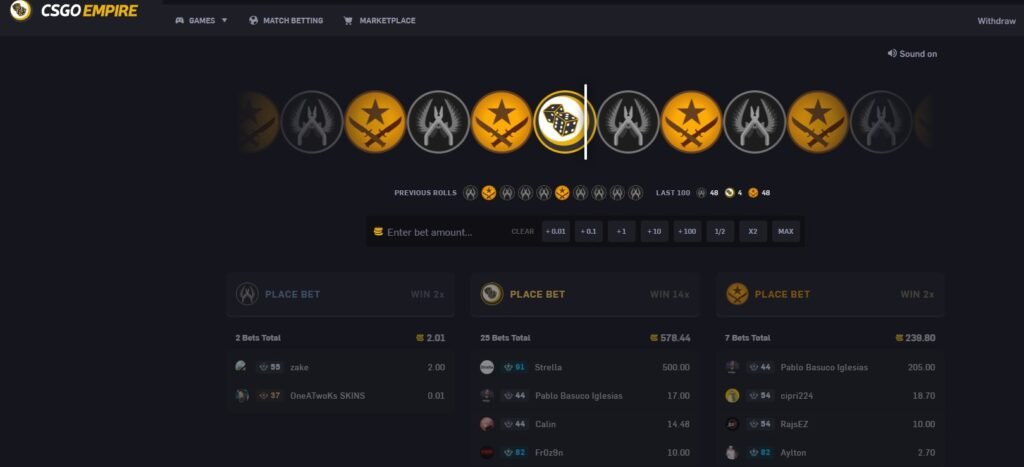
Most CS2 gambling sites try to copy the game’s look to keep things familiar. Layouts feature dark-colored themes, references to maps or teams, and recognizable imagery that reminds players of the Counter-Strike universe.
So, you’ll find designs full of icons like CT and T logos, weapon outlines, C4 bombs, flashbangs, maybe even the iconic chickens. Behind these visuals, an automated system tracks the value of deposited goods, calculates risks, and supervises fairness behind the scenes.
When you first arrive, setting up an account is painless. No endless signup forms, just connect your Steam profile, and you’re verified immediately. That connection lets the site see your inventory and confirm who you are.
Next, you’re taken to your personal control hub. There, you can view available funds, look through your wager history, and pick options for skin deposits or withdrawals. Some sites keep this dashboard clean and minimal; others pack it with animations, stats, and earnings charts.
Funding your account means sending skins from Steam over to the site’s trading bot. After receiving the items, the platform automatically shows their converted worth as internal credit. Once that appears, you’re ready to gamble.
In most cases, outcomes appear right after each round. Balances update automatically, whether you win or lose. Some bets, like guessing the outcome of an ongoing professional CS2 match, take longer, since the result only finalizes when the match is over.
Many games move much faster. Case openings, for example, show instant animated reveals mimicking the thrill of opening a loot crate. That burst of movement and anticipation keeps players glued to the screen, typically ending within seconds.
Sites dedicated to Counter-Strike gambling fall into several categories. Each one focuses on different ways players can place bets or interact with their items. Some websites even mix features from multiple sections, blending them together under one domain.
These are the sites purely centered on CS2 item betting. You either gamble directly with your actual skins or have the website convert them into coins right after deposit.
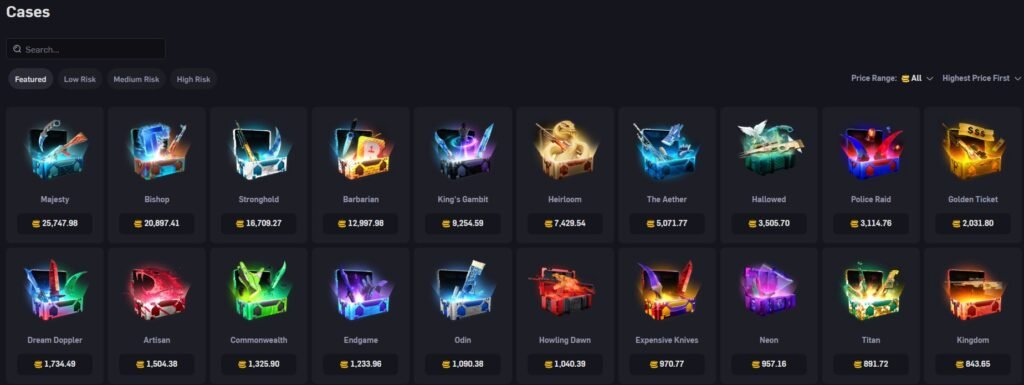
The experience is built for speed and excitement. Expect flashy animations and sound effects during case openings, upgrade machines that let you risk low skins for a shot at higher-value ones, and contracts that allow merging multiple items in exchange for a more expensive one. Most mechanics here take inspiration straight from game features that regular Counter-Strike players already understand instinctively.
This variation pits gamers directly against each other instead of competing with the house. Several players contribute to a shared pool of items or credits, and a single winner takes home everything based on specific rules.
Because multiple people join each round, the collective prize builds quickly. Of course, since only one winner survives, the risk shoots up. Examples of these PvP-style experiences include case battles (competing to unbox the best haul), simple coin flips between two bettors, and large jackpot rooms where every participant throws something into a pot before one lucky gamer claims the entire pile.
If watching pro teams is more your thing, esports betting portals might suit you best. Instead of relying on randomized games, you put your skins, or sometimes traditional money or crypto, on real-world Counter-Strike 2 matches.
The pace here is slower, but the thrill feels different. You back your favorite roster, then wait for the official match conclusion. Once the scoreboard locks in, the site updates your balance, distributing winnings instantly if your bet turns out right.
Some hubs tied to the Counter‑Strike 2 gambling scene don’t stop at just skin‑focused games. Instead, they go full casino mode, adding everything from slots to live dealers alongside their skin‑based features. These places aim to be the all‑in‑one destination for people who want the feel of a real online casino while also keeping that CS2 flair. Many of them even have official gambling licenses, which makes them look more reliable to players.
So besides Counter‑Strike‑themed mini‑games, you’ll usually see an entire library of standard casino content, spinning slot reels, blackjack tables hosted by real people, or even full game‑show setups you can interact with live. Because they blend regular casino gaming with CS2‑style betting, they tend to attract a mix of crowds: those who come from the gaming world looking for something familiar, and long‑time casino fans who just think the skin aspect sounds fresh.
Even though every skin gambling site looks and feels a little different, most of them follow the same basic structure. They include similar functions made to help new users settle in quickly and give experienced players the features they expect.
To get started, you have to make a personal account. That’s what the website uses to recognize you and keep your stuff organized. Through your profile, the site tracks your entire history, what you’ve deposited, bets you’ve placed, wins, losses, and your recent activity.
Many sites even show small stats pages so you can peek at your lifetime totals, like how much you’ve wagered or what games you’ve played most often. It’s a neat way to keep tabs on your performance, or remind yourself how deep you’ve gone.
Every account has its own built‑in wallet. That’s where your available credit sits, the amount you can actually gamble with.
You can load that wallet by sending skins or using whatever payment types the website supports. As soon as the transaction clears, your balance updates instantly. The same goes for withdrawals or bets, so you always see your up‑to‑date total without refreshing.
The lineup of games mainly depends on the site’s style. Some platforms focus purely on CS2 content, case openings, upgrade systems, and themed betting rounds, while others throw a broad mix of casino material into the pack.
One thing they share, though, is speed. Almost every game is built for quick action, letting people jump rapidly from round to round. No long waiting between spins or matches, fast feedback keeps the energy up.
Pretty much every gambling site tries to keep people around with incentives of some kind. That might be a starter bonus when you register, or ongoing perks if you’ve been an active player for a while.
Newcomers often get a little boost, like free coins after the first sign‑in, while loyal users score things like bonus multipliers, deposit promos, or giveaways. It’s a marketing move for sure, but it makes the routine a bit more fun.
Trust is a massive part of any online betting experience, and CS2 gambling sites try to make sure players feel safe from rigged outcomes. Many brands publish a clear explanation of how they generate random numbers, complete with tools you can use to check the fairness yourself.
You’ll usually see mentions of something called “provably fair”, a method that lets each user confirm for themselves that a round’s result wasn’t faked. Top‑tier websites even include long write‑ups breaking down the tech behind it so everyone knows the math adds up.
A common doubt players have about these sites is a simple one: Is this actually random? When your in‑game items have real market value, nobody wants secret manipulation happening behind the curtain.
To handle that worry, many platforms publish the win odds before anyone even clicks “Play.” Knowing your chances upfront gives players a clearer picture of risk and reward, not just blind guessing.
Good gambling sites don’t just say “trust us”; they actually show proof. They describe how their randomization works, show the math behind the systems, and sometimes keep full records of completed rounds. Players can double‑check results, ensuring each spin or roll was truly random.
That “provably fair” method I mentioned earlier is what most use. In plain terms, the software makes a hidden code, called a seed, each round. The seed produces the random outcome using a set algorithm. When the round’s done, that seed becomes publicly visible so players can verify what happened. Because both parts are checkable, you can confirm for yourself that the result wasn’t fixed.
Many platforms go further by adding public feeds showing recent wins or game logs. Some even break down which bets hit big that day. It’s all meant to build trust and show that no one is secretly controlling the dice behind the screen.
Skins live completely inside the Counter‑Strike 2 world. They don’t give you superpowers or special abilities, they just change how your gear looks. But because some are incredibly rare, they’ve built real‑world value. For some players, these items are like collectible art pieces, and for others, they’re digital bragging rights.
The appeal is totally aesthetic, they don’t help you win a match, but the right design or rarity can make prices skyrocket. Over time, a massive buying and trading scene has developed. Skins now function almost like stocks, with prices that can shift daily depending on hype and supply.
Several things decide what a particular skin’s worth:
The whole market is wrapped up in the community. Any game update, new weapon collection, or trading feature can swing prices wildly. When Valve introduced a new trade‑up system a while back, for example, red‑tier skins jumped in value overnight.
Another cool part is that many of the skins came from player‑made designs. This link between user creativity and official releases keeps the economy lively and community‑driven. It’s a rare case where players themselves shape the financial side of the game.
Even though CS2 gambling and traditional casinos both revolve around betting on uncertain results, they feel drastically different once you’re in them.
At normal casino sites, cash runs everything. You load real money or crypto, spin reels, and hope to come out richer. Simple.
CS2 sites, on the other hand, let you gamble your skins, the collectible digital gear from your account. The website then turns them into its own version of coins equal to market values. It’s like gambling with virtual art instead of dollars.
Instead of flashy fruit icons and neon-slot graphics, CS2 platforms mirror the Counter‑Strike universe. Imagine a roulette wheel inspired by Counter‑Terrorists versus Terrorists, with guns, grenades, and familiar symbols scattered around. Regular casinos lean more on classic glam, cherries, gold bars, and glowing diamonds, while CS2 stays rooted in gaming aesthetics.
People play classic casinos mostly to win cash, plain and simple. In CS2 gambling, though, reasons vary. For some, it’s the adrenaline of unboxing or trying for rare collectibles. For others, it’s about community and social vibes. Many just enjoy hanging out in an environment filled with fellow Counter‑Strike fans.
A big part of why CS2 gambling exploded is the community itself. Everyone already shares the same interest in the game, which makes these websites feel less anonymous and more connected.
To push that social side further, popular sites include live chats where people chat, brag about wins, or discuss the next big match. It’s not uncommon to see players casually talking about strategies or skins while spinning the wheel.
Streaming also played a huge role. Tons of players broadcast their sessions on Twitch, Kick, or YouTube, walking audiences through bets, trading tips, and their reactions to unboxings. For new viewers, it’s education and entertainment rolled together.
Like any kind of wagering, there’s risk. You can lose expensive items or cash equivalents fast. Add in sketchy operators, and it’s easy to see why research matters before depositing anything.
CS2 gambling sites are run by third‑party businesses with no official link to Valve. That’s why safety, reputation, and fairness tools should all be major considerations. Stick to platforms with transparent systems and positive reviews.
The legal landscape is also messy. Many countries still haven’t clarified where skin gambling fits within their laws, and some regions block these sites entirely. To dodge regulation, some marketers call their sites “trading hubs” instead of outright casinos, walking that thin legal line.
And of course, unreliable sites are the biggest trap. Stories exist of accounts being locked or funds frozen after big wins. Experienced users will always recommend checking legitimacy first, even if the site looks fancy.
This long overview is meant to outline the basics of CS2 gambling, how it works, why it exists, and what sets it apart from more typical casinos. In some aspects, both share common ground, betting, thrill, chance, but the details, community, and mechanics make the CS2 world its own thing entirely.
We’ve walked through site structures, reward systems, fairness checks, and community dynamics, plus the risks every gambler should understand. With that foundation, anyone curious about skin wagering now has a clearer picture before testing it themselves.
You’ll see lots of custom titles, crash, roulette, coinflip, mines, plinko, as well as CS2‑specific ones like case openings, upgrade tools, skin contracts, and battle rounds against other players.
Legit platforms usually warn users ahead of time and let you cash out your coins or skins before shutting their servers. Always stay updated on site announcements.
High‑end platforms with active marketplaces adjust skin values constantly to match the latest market trends, keeping things accurate during deposits and withdrawals.
Not usually. Most platforms require accounts without trade or VAC bans. Any restriction normally prevents participation.
Most do! Expect perks like welcome packages, reward tiers, or loyalty points for regular play.
That depends on how the platform runs. Some work only with items themselves; others let you turn those internal coins back into skins or even crypto payouts when you’re done betting.